
For Providers
A Clinical Guide to Working with Youth with Conduct Disorders and Limited Prosocial Emotions
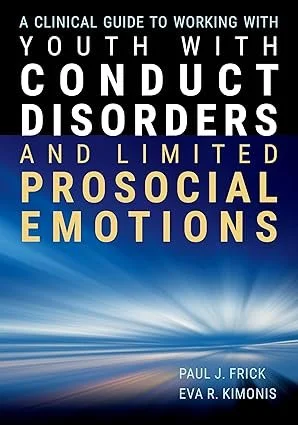
This practical guide provides clinicians with evidence-based tools and strategies to assess and treat children and adolescents with serious behavior problems who exhibit limited prosocial emotions (LPEs).
Extreme behavior problems in youth, while rare overall, have an outsized impact. These youth can cause tremendous harm to themselves, their peers, and even adults while also presenting as callous, unemotional, unremorseful, and unconcerned about the consequences of their actions. Without intervention, these children face increased risks of justice system involvement, school dropout, and serious mental health issues such as depression, suicidal ideation, and substance abuse that can continue into adulthood.
Youth with serious conduct problems pose distinct challenges for mental health professionals, particularly when accompanied by LPEs. To support clinicians, the authors offer a comprehensive framework for engaging families, conducting specialized assessments, and delivering targeted treatment. Readers will learn how to use tools such as the Inventory of Callous–Unemotional Traits and the Clinical Assessment of Prosocial Emotions to evaluate the presence of LPE specifier, as defined by the DSM and the ICD. The book also presents multiple promising treatment methods, with a particular focus on an adapted version of parent–child interaction therapy (PCIT) designed specifically for young children with callous–unemotional traits.
A detailed case example follows a 5-year-old Aboriginal boy and his mother, illustrating the full course of assessment, parent engagement, and intervention in the treatment of severe conduct problems with limited prosocial emotions.
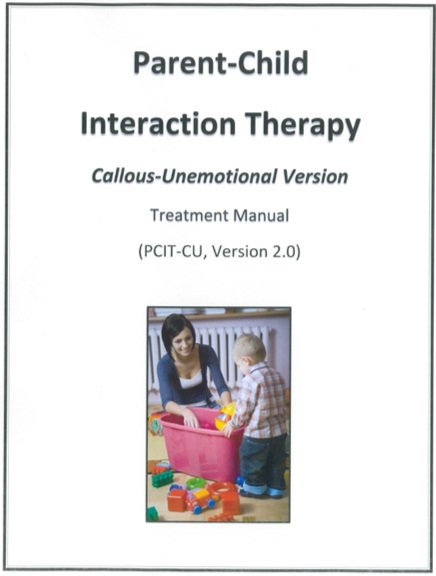
PCIT-CU Treatment Manual
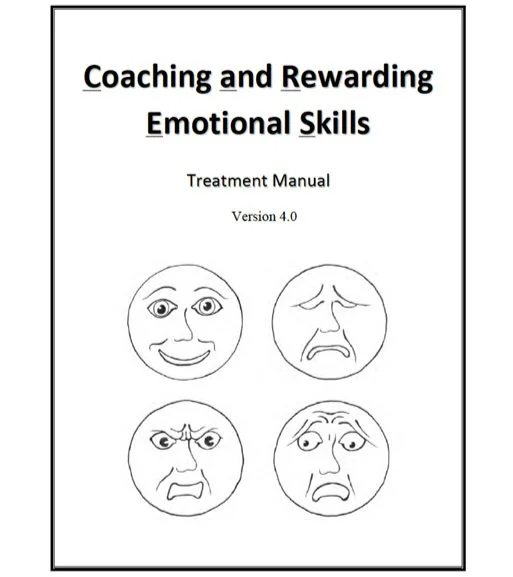
Parent-Child Interaction Therapy – Callous-Unemotional Version (PCIT-CU) is an adaptation of the PCIT Protocol for Children with Conduct Problems and Limited Prosocial Emotions (age-inappropriate levels of empathy, remorse, care about performance, and experience/expression of emotions). The official PCIT-CU protocol and its adjunctive Coaching and Rewarding Emotional Skills (CARES) treatment protocol are only available from their developer, Professor Eva Kimonis. These treatment protocols include session outlines for all PCIT-CU/CARES sessions, forms, and caregiver handouts. They are intended for use by mental health professionals who have completed the requisite training in Standard Parent-Child Interaction Therapy (PCIT) and PCIT-CU/CARES. Available in English only.
Click here to purchase the PCIT-CU and CARES treatment protocols. After purchasing your manual through Lulu, please upload proof of purchase via this link to organise access to our digital resources. Once submitted, we’ll email you a link within 72 hrs. Thank you for your purchase!
The Standard PCIT protocol can be purchased from PCIT International. This site also provides general materials and handouts for delivering PCIT.
Research on PCIT-CU/ CARES
Parent training adapted to the needs of children with callous–unemotional traits: A randomized controlled trial
Fleming, G. E., Neo, B., Briggs, N., Kaouar, S., Frick, P. J., & Kimonis, E. R. (2022). Parent training adapted to the needs of children with callous–unemotional traits: A randomized controlled trial. Behavior Therapy, 53(6), 1265–1281. https://doi.org/10.1016/j.beth.2022.07.001
Parent–Child Interaction Therapy: Callous-unemotional adaptation for a preschool boy with conduct problems
Agazzi, H., Knap, K., & Kimonis, E. R. (2020). Parent–Child Interaction Therapy: Callous-unemotional adaptation for a preschool boy with conduct problems. Clinical Case Studies, 19(5), 370–385. https://doi.org/10.1177/1534650120950524
PCIT for children with callous-unemotional traits
Fleming, G. E., & Kimonis, E. R. (2018). PCIT for children with callous-unemotional traits. In: Niec, L. (ed.) Handbook of Parent-Child Interaction Therapy (pp. 19–34). Springer. https://doi.org/10.1007/978-3-319-97698-3_2
Parent-Child Interaction Therapy adapted for preschoolers with callous-unemotional traits: An open trial pilot study
Kimonis, E. R., Fleming, G., Briggs, N., Brouwer-French, L., Frick, P. J., Hawes., D. J., Bagner, D. M., Thomas, R., & Dadds, M. (2018). Parent-Child Interaction Therapy adapted for preschoolers with callous-unemotional traits: An open trial pilot study. Journal of Clinical Child & Adolescent Psychology, 48(1), 1-15
Adapting internet-delivered Parent-Child Interaction Therapy to treat co-occurring disruptive behavior and callous-unemotional traits: A case study
Fleming, G. E., Kimonis, E. R., Datyner, A., & Comer, J. S. (2017). Adapting internet-delivered Parent-Child Interaction Therapy to treat co-occurring disruptive behavior and callous-unemotional traits: A case study. Clinical Case Studies, 16(5), 370–387. https://doi.org/10.1177/1534650117699471
Using a novel emotional skills module to enhance empathic responding for a child with conduct disorder with limited prosocial emotions
Datyner, A., Kimonis, E. R., Hunt, E. A., & Armstrong, K. (2015). Using a novel emotional skills module to enhance empathic responding for a child with conduct disorder with limited prosocial emotions. Clinical Case Studies, 15(1), 35–52. https://doi.org/10.1177/1534650115588978